What we do
What we do
Our approach
Culture challenges & opportunities
Solutions
Target Culture Mapping
Culture Insights Survey
Discover Deep Dive Diagnostic
Leading by Example
People Manager Activation
Walking with Accountability
Walking with Agility
Taylor Assessment
Clients
What our clients say about us
Case studies
Blog & insights
Blog
Reports & white papers
eBooks
Videos
Podcast
Books
About
Who we are
Our team
Careers
Contact
Blog
Our latest news and insights
Culture change
(143)
Leading culture
(103)
Leadership
(72)
Corporate culture
(64)
Innovation
(58)
Culture management
(55)
Amanda Fajak
(32)
Carolyn Taylor
(29)
Digital
(27)
AI
(26)
Behaviour
(26)
Business books
(26)
Jerome Parisse-Brassens
(25)
How to Improve Team Effectiveness
While there is no doubting the impact that talented leaders and individuals can have on culture and business performance, a great team has
Read More
Driving positive behaviour change in the workplace
With increasing pressure on people’s time, shortening attention spans, and tightening economic conditions, interventions designed to drive
Read More
How to Create a Culture of Innovation
Innovation is a much overused and misused term in business. Fundamentally, the end game of innovation is to provide new products, services,
Read More
Hiring for Culture – The Ultimate Guide
With the growth in skills-based hiring, fractional employment, and the transactional gig economy, there have been questions about the
Read More
Culture assessment to drive organisational change
Assessing your company culture is essential when driving organisational change because you need to understand where you’re starting from.
Read More
Building a Culture Plan
Organisational culture can sometimes seem a nebulous concept. While you can clearly feel culture and its impacts, defining what needs to
Read More
Podcast: Cultural Contribution Series
The first episode of Carolyn Taylor's podcast series on cultural contribution is now available.
Read More
How to create a culture of agility
Agility is not a new concept in business, nor is it a buzzword. In fact, many companies claim to be agile, yet very few are. Like innovation
Read More
How to Develop your Risk Culture & Master Risk Management
As economic and reputational pressures on companies grow, the ability to master risk is becoming a critical and differentiating skill. In
Read More
Culture Lab: Assessing talent for cultural contribution
We’re excited to announce an exclusive Culture Lab Masterclass event on ‘Assessing talent for culture contribution’ that Walking the Talk
Read More
How to refresh your company values
Do you feel your company values may not fully represent who you are any more and therefore need updating? If so, you’re not the only one.
Read More
How does the Taylor Assessment work?
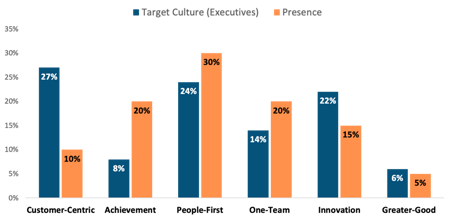
The Taylor Assessment is based on six culture archetypes: Achievement, One-Team, Innovation, Customer-Centric, People-First, and
Read More
Video: Refreshing Values
Do you feel your company values may not fully represent who you are anymore and therefore need updating? Watch Liz Stanley & Jerome
Read More
How to Balance a Culture of Wellness with High Performance
Business performance and employee wellbeing are often pitted as conflicting with each other. However, far from being mutually exclusive,
Read More
What makes The Taylor Assessment unique?
Why did we invest in designing the Taylor Assessment for the market? What makes it unique, and why we are excited about the value it can
Read More
Why hiring for culture contribution is so important
We have already looked at what The Taylor Assessment is and how it helps with hiring for culture contribution. In this blog we’re going to
Read More
Measuring Culture Contribution – Introducing The Taylor Assessment
If you know building the right culture is important for your future business successes, then you know that you need leaders who will
Read More
How To Improve Your Post-Pandemic Leadership
What are the main challenges facing people managers in the Future of Work? When we look at the Future of Work now, essentially what we’re
Read More
Amanda Fajak featured on the Leading Voices podcast
Amanda Fajak, CEO of Walking the Talk, and Larry Krema, Managing Director in the Real Estate Practice of ZRG, recently discussed how to
Read More
Why do so many culture transformations fail?
Transformation is a significant change in form and function that is irreversible and sustainable, for example turning coal into diamonds.
Read More
Amanda Fajak featured in Authority Magazine
Walking the Talk CEO Amanda Fajak recently shared with Authority Magazine her thoughts on the challenges of remote working and tips for
Read More
You can’t deliver strategy without a supporting culture
At Walking the Talk, we believe that culture is comprised of systems, symbols, and behaviours that are encouraged, discouraged, and
Read More
How to strike the right balance on empowerment
Empowerment is a cultural challenge that we hear from many of our clients. As a leader it can be tricky to find the right balance between
Read More
Agile Mindset: It’s all just an experiment
In a previous blog on agility we promised to delve deeper into the four critical mindsets you need to be truly agile. Here we take a look
Read More
Culture Labs Masterclass Events
We’re excited to announce a series of exclusive Culture Labs Masterclass events that Walking the Talk is hosting in November. The labs are
Read More
Agile Mindset – Collaborating to move quicker than your competition
In a previous blog on agility we promised to delve deeper into the four critical mindsets you need to be truly agile. Here we take a look
Read More
Your role as a leader in culture change
We’ve talked in a previous article about the importance of the leadership shadow on culture change. But we often find leaders don’t
Read More
Agile Mindset: Empowering your people at all levels
In a previous blog on agility we promised to delve deeper into the four critical mindsets you need to be truly agile. Here we take a look
Read More
How to help people managers lead culture change
In a previous article regarding the importance of people managers, we looked at why people managers are so critical to culture change. Yet
Read More
Why humility is a key leadership trait
Leaders often believe they have to have all the answers. They feel they must live up to the expectation of being the smartest person in
Read More
People managers hold the key to successful culture change
Many culture change programmes focus huge amounts of attention on senior leadership, HR teams, and networks of champions. People managers
Read More
Why you need to reassess your organisational values
The values of an organisation are not the words on its website or the posters on its walls. They are the day-to-day behaviours, systems,
Read More
Agile Mindset: Putting the customer at the heart of your business
In our previous blog on agility we promised to delve deeper into the four critical mindsets you need to be truly agile. Here we take a
Read More
Increasing trust to drive high performance
The foundation of any successful team, and organisation for that matter, is trust. In a hybrid working world, it is more important than
Read More
Walking the Talk announces transition in leadership roles and appointment of new CEO
Walking the Talk, a division of ZRG, is thrilled to announce the appointment of Amanda Fajak as its new CEO, effective immediately. Having
Read More
The Risks of Forcing People Back into the Office: Push Vs Pull
The COVID-19 pandemic has significantly transformed the way we work, with remote work becoming the new norm for many professionals around
Read More
Simple starters for leaders in building an inclusive culture
In our last blog, ‘How to build an inclusive culture’ we looked at the role of behaviours, systems, and symbols in building an inclusive
Read More
Navigating the Return to the Office: The Impact on Inclusion
The COVID-19 pandemic brought about a seismic shift in the way we work, with remote work becoming the new norm for millions of people
Read More
How can you build an inclusive culture?
You may be thinking that building an inclusive culture is a huge task, and you don’t know where to start. The key is to focus on the
Read More
Return to the Office: Finding Balance in a Post-Pandemic World
During the COVID-19 pandemic, our lives were dramatically reshaped as we adapted to remote work. Zoom meetings, virtual collaboration, and
Read More
Why is a culture of inclusion so important?
Here we unpack why it’s so important for companies, and the business benefits it will bring to your organisation.
Read More
Video: What behaviours drive inclusive cultures?
Watch Walking the Talk's Mairi Doyle talk about what behaviours drive inclusive cultures.
Read More
What is an inclusive culture?
Inclusion is rightly a hot topic for organisations looking to change their culture and improve performance. Many companies understand the
Read More
Video: What symbols are important for inclusive cultures?
Watch Walking the Talk's Mairi Doyle talk about what symbols are important for inclusive cultures.
Read More
White Paper: Shaping a culture of inclusion
Walking the Talk is delighted to announce the release of our 2023 white paper on 'Shaping a culture of inclusion'. One of the hottest
Read More
Why you need to challenge the idea of perfectionism
Is the pursuit of perfectionism holding your organisation back? In our fast and frenetic world, the default position of many people is
Read More
The importance of the tipping point in culture change
For culture change to gain momentum and stick, a tipping point needs to be reached. This threshold can be lower than organisations think,
Read More
Video: Symbolic messages
Watch Walking the Talk's Jerome Parisse-Brassens talk about the importance of symbolic messages in company culture.
Read More
Agile cultures: Start small and build momentum
Despite our human craving for stability, the world is only becoming more uncertain (52% of companies on the Fortune 500 since 2000 have
Read More
Arqiva Case Study
Watch Amanda Fajak in conversation with Shuja Khan (CEO, Arqiva), Sarah Jane Crabtree (Chief People Officer, Arqiva) and Dominic Biles
Read More
The secret for changing your culture fast - Focus, focus, focus
Prioritisation: We all know the benefits. We all know we should do it. We all know how hard it is. The basic principle behind the power of
Read More
Culture Recruiting Report
We are pleased to announce that Walking the Talk have partnered with Hunt Scanlon Media for their 2023 Culture Recruiting Report.
Read More
Why you need to highlight values during a crisis
The true test of an organisation’s values comes when you’re under crisis. Whether that be a financial, reputational, or some other risk,
Read More
Client case study webinar: Arqiva
Join us on Wednesday, April 26th at GMT 15.00 / CET 16.00 / EST 11.00 for a special webinar. Amanda Fajak, Executive Director of Walking
Read More
The importance the shadow of a leader has on culture change
At Walking the Talk, we believe culture is created through the unspoken messages people receive, through behaviours of others , key systems
Read More
Does company culture affect employee motivation? No - and yes
No Elements that are more likely to directly impact employee motivation are short-term factors such as pay, working conditions, work-life
Read More
Agility is the key to success in this BANI world
We’d just about got used to being in a VUCA (Volatile, Uncertain, Complex, Ambiguous) world when a new acronym popped up – BANI (Brittle,
Read More
In culture as in health: a good diagnosis matters
Would you trust a doctor who wanted to treat your stomach ache without understanding what was causing it? I know I wouldn’t. A good
Read More
Digital transformation and Customer-centricity: Chicken or egg?
Client: "We need to assess our digital maturity."Me: "Why?"Client: "As you know from our strategy, we must become more customer-centric if
Read More
Why you need to build a language of accountability in your organisation
Accountability is the ability of one person or group to deliver to the expectations of the other. Sounds simple, doesn’t it? In reality,
Read More
Successful culture change starts at the top
As human beings, we are programmed to try and fit in. In the corporate world, this means we take cues from our leaders as to what is
Read More
Edgar Schein (1928 – 2023)
Walking the Talk is saddened to hear of the recent passing of Edgar Schien, a true pioneer and inspirational colleague in the field of
Read More
Amanda Fajak named in list of Top 50 women leaders
We are proud to announce that Amanda Fajak, Walking the Talk's President of North America, was recently included in Women We Admire's list
Read More
Carolyn Taylor to deliver keynote at New York culture conference
We are pleased to announce that Walking the Talk's founder Carolyn Taylor will be the keynote speaker at Hunt Scanlon's forthcoming
Read More
Video: ANDRITZ's culture change journey
Watch Walking the Talk's Jerome Parisse-Brassens in conversation with ANDRITZ's culture team on how they defined and embedded a culture of
Read More
Dubai Culture Clinics
Carolyn Taylor, Founder and Chairperson of Walking the Talk, recently hosted two exclusive Culture Clinics at ZRG’s new office at the
Read More
Webinar: ANDRITZ's culture change journey
Join us on Wednesday, November 16th at GMT 12.00 / CET 13.00 / EST 07.00 for a special webinar when Jerome Parisse-Brassens, Executive
Read More
Top tips for building an accountable culture
Creating an accountable culture – where people make promises and keep them – is critical to organisational success. Here are six key
Read More
How the pandemic brought questions about purpose at work
In the new corporate scenario, employees must develop a sense of obligation and care about their colleagues and customers so as not to
Read More
4 ways to get more from your organisation's values
In a year the news has been dominated by overwhelmingly negative headlines, a beacon of positivity shone this week with the news that Yvon
Read More
Walking the Talk Expands U.S. Operations, Appoints Amanda Fajak President, North America
Walking the Talk, a ZRG company and a world leader in enhancing performance results by aligning culture with strategy, today announced the
Read More
Empowerment - It starts with you
What does the role of empowerment mean for us and what does it takes to actually claim and reclaim that sense of power inside of oneself?
Read More
Podcast: Recruiting & Promoting
Who you choose to fill an empty role sends such a strong message about what you truly value. In the latest Walking Your Talk Podcast,
Read More
Podcast: How to measure culture
As a special guest on The Lunchtime Series podcast, Walking the Talk's Jerome Parisse-Brassens discusses the need to understand culture,
Read More
The language of accountability
Language is a powerful lever that can be used to transform culture. One could argue that I have built this belief as a trained linguist,
Read More
Be-ing agile eats do-ing agile for breakfast
Drucker famously said that culture eats strategy for breakfast, by which he meant that you can have the best strategy in the world but
Read More
Managing the emotional journey of M&As
Are you aware of the emotional journey that people go through during a merger or an acquisition process? This journey is the same for all
Read More
Video: Achieving measurable outcomes through culture and strategy
Watch Cora Béghin, Vice President of Learning and Development at Sage, discuss how with Walking the Talk Sage were able to identify key
Read More
Video: Culture Conversations - Hybrid Working Environments
In this episode of ZRG's Culture Conversations, Amanda Fajak discusses the role of hybrid work arrangements on company culture in
Read More
Performance reviews as key lever for culture change
An increasing number of organisations are replacing the old-style staff performance reviews with ongoing manager feedback to employees.
Read More
Video: Limiting self-beliefs
Walking the Talk's Mairi Doyle explains the limits of self-beliefs and the effects they have.
Read More
The power of beliefs
Last week I read a book that simultaneously amazed and reassured me. It reassured me because it confirms a major foundation of our work on
Read More
Identifying your limiting beliefs
I have been doing some work with clients on limiting beliefs – it is such an interesting topic and I personally think it is so powerful
Read More
Should you focus more on behaviours or values in your culture journey?
Both values and behaviours form part of your culture, so in theory you could use both to shape your culture the way you want it. However,
Read More
Podcast: The Lunchtime Series
Walking the Talk's Jerome Parisse-Brassens is the special guest on the latest episode of The Lunchtime Series podcast, where he talks
Read More
Culture Conversations: Executive Coaching
Watch Walking the TalkExecutive Director Dr Liz Stanley discuss the pros and cons of executive coaching with Mary Kier, Global
Read More
Carolyn Taylor to deliver keynote on culture in New York
We are pleased to announce that Walking the Talk's Carolyn Taylor will be one of the keynote speakers at Hunt Scanlon's forthcoming
Read More
Measuring organisational culture change
Measuring culture change is good culture management, but how do you do it?
Read More
Video: Culture Conversation - Hybrid Working
Walking the Talk's Amanda Fajak talks about recruiting and onboarding in the hybrid world with ZRG's Mina Ames.
Read More
Podcast: How to anchor an agile culture (German audio only)
Walking the Talk's Bjoern Johannsmeier was a recent guest on the Astellas Pharma Deutschland - Changing Tomorrow podcast, discussing 'How
Read More
Tips for encouraging collaboration in a hybrid world
Loss of face-to-face working has made many feel isolated. People who started work during the pandemic and have only worked remotely report
Read More
Tips for empowering employees in a hybrid world
Managing productivity and performance from a distance has been difficult for many managers, whilst many employees have appreciated and
Read More
Tips for being more caring in a hybrid world
Companies who have shown caring to clients and employees during the pandemic have thrived and have seen positive culture capital built.
Read More
Video: The importance of symbols in a hybrid environment
Jerome Parisse-Brassens discusses the importance of symbols in a hybrid environment.
Read More
Tips for being more courageous in a hybrid world
Most people are operating in unchartered territory in terms of new ways of working. Flexibility, adaptability and vulnerability (i.e. “I
Read More
Managing culture in a hybrid world
Walking the Talk is excited to announce the release of our 2021 white paper on managing culture in a hybrid environment, the latest in our
Read More
Our culture mission takes an exciting step forward with ZRG Group
Today Walking the Talk becomes a fully owned division of ZRG Partners, a fast-growing global talent solutions and executive search firm
Read More
Podcast: Performance Acceleration series
Accountability goes up when the right conversations occur. In the first episode of the Walking Your Talk podcast's Performance Acceleration
Read More
Video: Carolyn Taylor & Liz Stanley discuss Accountability
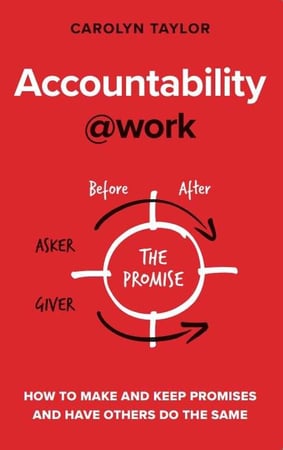
We are delighted to announce that Carolyn Taylor's new book, Accountability@work: How to Make and Keep Promises and Have Others Do the Same
Read More
Podcast: Trust & Accountability
Walking the Talk's Founder Carolyn Taylor was this week's guest on The Recruiting Future Podcast discussing trust and accountability.
Read More
Accountability@work book
We are delighted to announce that Carolyn Taylor's new book, Accountability@work: How to Make and Keep Promises and Have Others Do the Same
Read More
A new look and feel for Walking the Talk
Today we launched a new brand look and feel for Walking the Talk.
Read More
Podcast: Setting the ambition
Turning your pursuit into action is given more urgency with an ambition. In this episode, Carolyn describes different types of ambition and
Read More
Podcast: External Orientation
An external orientation is essential to truly pursue excellence, because it is only by going beyond what is familiar to you that you will
Read More
Podcast: Pursuit of excellence series
Pursuing excellence should be such a natural thing to do with a team of people, and yet it can be remarkably elusive amongst the anxieties,
Read More
Video: Astro's Culture Journey
Watch Walking the Talk's Amanda Fajak in conversation with Gavin Baxter, Astro’s Human Resources Director. Amanda and Gavin discuss Astro’s
Read More
The AI supportive mindsets and patterns of behaviour (Video)
Businesses that pay early attention to encouraging the mindsets and patterns of behaviour that support AI adoption will have improved
Read More
Is your culture hindering digital transformation?
Walking the Talk’s solutionTo successfully transform in a digital world, businesses need to have certain cultural attributes that are not
Read More
The Digital/AI leader of tomorrow is a connected leader
For Walking the Talk’s latest research into cultures for Digital and Artificial Intelligence, we interviewed numerous leaders from many
Read More
Empowerment is the key to the digital transformation kingdom
Companies that led successful Digital Transformations realised that they had to empower their employees to be successful in the new world.
Read More
Exploding digitally enabled technologies – Survive? Thrive?
C-Suite CHRO recently discussed, as pandemic year of 2020 nears to end, how they fared with exploding digitally-enabled technologies. Did
Read More
Podcast: Special Edition - Paula Harraca, ArcelorMittal
In this episode of the Walking Your Talk podcast, special guest Paula Harraca, Head of People & Innovation at Arcelor Mittal Long in
Read More
Empowerment is the key digital transformation success factor
One of the key cultural attributes of successful digital transformations, which we identified in our recent research on Culture for
Read More
Having and holding to clear, aligned principles is critical
Digital Transformation provides the opportunity to create a seamless experience end to end across customers, across products, across
Read More
How has your organisation’s purpose shifted in 2020?
How has your organisation’s purpose shifted or changed in the pandemic year of 2020, that saw an exponential rise of digitalisation at
Read More
Digital Transformation: It's the whole that matters
To succeed in the AI-powered world, you not only need to be connected, you also need to embrace the greater good for the business and
Read More
What is the purpose of the physical workplace in 2021?
What is the purpose of the “physical workplace experience in 2021 and beyond? Here is what Australia’s C Suite CHRO’s think.
Read More
The 3 key 'must-haves' for faster digital transformation
Walking the Talk's Lorraine Farah explains what Australia’s C-Suite CHRO’s see as the 3 key 'must-haves' as they move faster towards
Read More
Podcast: Cultural readiness for the AI transformations
Walking the Talk's Amanda Fajak recently joined Matt Adler on the Recruiting Future podcast to discuss some of the findings from our recent
Read More
A root cause of significant cultural resistance
Walking the Talk's Jerome Parisse-Brassens explains that a root cause of significant cultural resistance is managers and employees using
Read More
A digital transformation vision that lifts and inspires
Digital Transformation and AI are more often than not associated with negative outcomes for employees – cost cutting, automation, job
Read More
Digital Transformation: A vision to create meaning
Digital Transformation without a clear vision and purpose often ends up in a simple digitalisation process, with manual processes conducted
Read More
Digital & AI: What got you here won’t get you there
A reality we all face is that today is different from yesterday and tomorrow will be different from today. What is becoming increasingly
Read More
Podcast: Prioritisation Series
The latest episode of Carolyn Taylor's Walking Your Talk Podcast on Prioritisation is now available on all podcast channels.
Read More
In an AI world transparency increases
In this video, Walking the Talk's Jerome Parisse-Brassens why in an AI world transparency increases because barriers are brought down and
Read More
In an AI-empowered world, maintaining control is even harder
Walking the Talk's Jerome Parisse-Brassens explains why in an AI-empowered world, maintaining control is going to be even harder because
Read More
Tips from business leaders at the forefront of AI
One of the many challenges for organisations is that the shift to widespread adoption of AI can have consequences in both a reduction in
Read More
Tips for placing humans at the centre of Digital & AI
It would be easy to approach Digital Transformation and AI with primarily a technology lens. However, what we have learned from business
Read More
Culture for AI: The human needs to be placed at the centre
Walking the Talk’s research on the kind of culture required for successful AI implementation has revealed that to be successful, the design
Read More
The significant shift we are seeing in culture today (Video)
The significant shift we are seeing in culture today is not a shift away from a focus on achievement and results – this has to remain
Read More
Humans need to be at the centre of ai (Video)
In this video, Walking the Talk's Jerome Parisse-Brassens shares one of the key findings from our 2020 research report ‘Is your culture
Read More
Why is your digital transformation stalling?
In this video, Walking the Talk's Amanda Fajak explains why organisations can find that their digital transformations are stalling.
Read More
Is your business culture AI ready? (Video)
In this video, Walking the Talk's Jerome Parisse-Brassens shares some of the key findings from our 2020 research report ‘Is your culture
Read More
Is your culture AI-ready?
At Walking the Talk, we believe that to be successful in an AI-powered world, businesses will need to have certain cultural attributes,
Read More
Your values are on show. What you do now matters.
I love Café Nero. I like the strong Italian coffee blend, the friendly staff, the fact I have an app on my phone and its so easy to get a
Read More
The culture leader of tomorrow
I am seeing a significant shift in organisational culture in response to the VUCA world we live it and the coming-of-age of Digital and
Read More
Matching words and deeds
Read Walking the Talk's founder Carolyn Taylor and Executive Director Amanda Fajak recent interview with Implenia's Employee Magazine
Read More
Patterns of an agile culture
There are four distinctive patterns of behaviour of an agile culture – customer-centricity, self-direction, experimentation and
Read More
Cracking the agile code
There’s a big difference between implementing an Agile process and having an agile culture.Watch our video to help crack the agile code.
Read More
How to influence your culture (positively)
Carolyn Taylor, Walking the Talk's Founder and Executive Chair, recently shared some inspirational ideas at the IWFM Conference in London.
Read More
The Danger Zone: When Leaders Lose Sight of their impact
When accusatory, emotive and vitriolic language is used by people in power, red warning lights go on all over the place and sirens blare.A
Read More
Improving Accountability in your organisation
Walking the Talk's Founder Carolyn Taylor explains some of the tips to improve accountability within your organisation.
Read More
Creating an agile culture for your organisation
After ten years of implementation of Agile by organisations around the world, I’m only seeing mitigated success. Agile takes its roots in
Read More
What are the key shifts to create an agile culture?
Creating an agile culture involves fundamentally rethinking how you run your organisation and most organisations that we spoke to in our
Read More
What does it mean to create an agile culture?
For many, Agile is associated with the technology part of your business or one or two pockets in your organisation. It is often thought of
Read More
Why should you consider agile for your organisation?
Our ability and desire to change as humans, has driven an extraordinary rate of change in particular over the past 10 years. Think of
Read More
Download Research Report on Agile Culture
Walking the Talk is excited to announce the release of our 2019 research report on agile culture.
Read More
Carolyn Taylor launches Walking Your Talk podcast
The Walking Your Talk podcast (links below) is a personal development journey for listeners on authenticity, courage and leadership,
Read More
2 great books for inspiring commercial achievement
An achievement approach can add value to a company by enabling it to differentiate itself from competitors who do not offer the same
Read More
4 great books for inspiring learning
Thinking about the future? Looking for a new mindset? Want to adopt a new approach? Want to solve problems better? Here are 4 of Walking
Read More
How to influence leaders culture is more than a 'nice to have'
Maintaining a strong link to the business and having tangible measures of your company's progress will transform your culture.
Read More
5 great books for inspiring the pursuit of excellence
Thinking about the future? Looking for a new mindset? Want to adopt a new approach? Want to solve problems better? Here are 5 of Walking
Read More
The difference of being 'Above or below the line'
When things start to go wrong, it's natural for us to react. But in every situation, there is an external and a controllable driver - we
Read More
Carolyn Taylor on keeping things simple
Does your organisation suffer from over complexity? Learn about how a leader's approach to simplicity can change things.
Read More
7 great books for inspiring continuous Improvement
Thinking about the future? Looking for a new mindset? Want to adopt a new approach? Want to solve problems better? Here are 7 of Walking
Read More
8 great books for inspiring giving and receiving feedback
Are you looking to shift your company values? Here are 8 of Walking the Talk’s recommended books on giving and receiving feedback
Read More
How Agile thinking could avoid a crisis
Whether you voted leave or remain, 80% of us now agree that Brexit is a shambles. There are much smarter people than me reflecting on why
Read More
Carolyn Taylor on Fear of Failure
Learn how to remove fear of failure from yourself and your organisation.
Read More
7 great books for inspiring constructive challenge
Thinking about the future? Looking for a new mindset? Want to adopt a new approach? Want to solve problems better? Here are 7 of Walking
Read More
Can a speak up culture prevent business issues?
In the wake of the Royal Commission and its investigation of banks, financial services and now disability and aged care organisations in
Read More
6 great books for inspiring future thinking - collaboration
Thinking about the future? Looking for a new mindset? Want to adopt a new approach? Want to solve problems better?
Read More
How do you build a foundation of trust?
Walking the Talk Executive Director Amanda Fajak explains how you build a foundation of trust.
Read More
7 great books for inspiring business generosity
Are you looking to shift your company values and be more giving? Here are 7 of Walking the Talk’s recommended books on corporate
Read More
Jerome Parisse-Brassens asks "What are you measuring?"
Transforming an organisation's corporate culture can seem as a difficult task, so it's important to know what it is you're measuring
Read More
Four key factors for achieving culture results fast
We all know that changing an organisation’s culture is a long-term game, but a common challenge we hear from clients is how to demonstrate
Read More
What are organisational culture archetypes?
There are six cultural archetypes that can be found in every organisation. What are those archetypes, and what roles do they play in
Read More
7 great books for inspiring focus
Here are 7 of Walking the Talk's recommended reads for inspiring focus.
Read More
What are the traps to avoid when creating an agile culture?
Are you looking to create an agile culture for your organisation? Walking the Talk Executive Director Amanda Fajak explains 3 things to
Read More
7 great books for inspiring simplicity
Here are 7 of Walking the Talk's recommended simplicity reads.
Read More
How to develop your leaders as role models
We’re pleased to invite you to watch highlights of our recent webinar to learn more about leading culture. Watch Amanda Fajak, Jerome
Read More
Carolyn Taylors talks Engagement
Learn why the relationship between culture and engagement is so important.
Read More
Developing leaders as powerful agents of change
The influence of leaders on organisational culture is strong. The shadow that leaders cast into their organisations means that the beliefs
Read More
The key shifts you need to create an agile culture
Discover the six key shifts your organisation needs to make in order to move towards an agile culture. {% video_player "embed_player"
Read More
2 great books for inspiring risk optimisation
Here are 2 of Walking the Talk's recommended risk optimisation reads.
Read More
What does working at the B-level mean?
Learn more about the people responsible for communicating problems and recommendations to the next level of management.
Read More
5 great books for inspiring problem solving with customers
Here are 5 of Walking the Talk's recommended problem solving with customers reads.
Read More
Video: The difference between culture and engagement
Executive Director Amanda Fajak explains why you shouldn't get culture confused with engagement.
Read More
3 great books for inspiring empathy with customers
A customer-centric approach can add value to a company by enabling it to differentiate itself from competitors who do not offer the same
Read More
What are the key elements for a culture plan?
What are the key elements that you need to think about when building your culture plan? Walking the Talk Executive Director Jerome
Read More
3 great books for being market driven
A customer-centric approach can add value to a company by enabling it to differentiate itself from competitors who do not offer the same
Read More
Video: What tools can you use to assess culture?
Choosing an efficient tool depends on why you want to assess your culture - Jerome Parisse-Brassens discusses two core tools involved in
Read More
Lion Air Disaster: A Classic Case of Achievement Overused
On October 29, Lion Air’s Flight 610 hurtled nose-first into Indonesian waters at more than 640 km/h with 189 people on board just minutes
Read More
Using a survey to describe your culture
Executive Director Jerome Parisse-Brassens explains why a behavioural tool such as a survey is useful for describing your company's culture.
Read More
Why assessing culture is critical
Executive Director Jerome Parisse-Brassens delves deeper into one of the first steps of the culture transformation process. {%
Read More
How Walking the Talk's tools can assess your culture
Jerome Parisse-Brassens explores how two main tools are efficient for assessing your company's culture.
Read More
Understand why your culture is the way it is
Learn why having a methodology that is qualitative is crucial for understanding your organisation's culture.
Read More
Creating an agile culture
Agile culture is about continually finding ways to improve your organisation's approach. Walking the Talk Executive Director Amanda Fajak
Read More
6 great books for inspiring openness
Looking for more effective ways to create one-team? The secret is to have shared openness! Here are 3 of Walking the Talk's recommended
Read More
How to use Company Culture Assessment Tools
Corporate culture has now become one of the key pillars on the transformation agenda of most businesses. This is because many organisations
Read More
Culture assessment - Case study
Our client, from the entertainment industry, is experiencing strong growth following a number of mergers and acquisitions. They are today
Read More
Cognitive and emotional cultures
Cognitive and emotional cultures I often get asked about the difference between cognitive and emotional cultures. Here is my take on it.
Read More
Watch Carolyn Taylor explain the importance of Empowerment
Empowering individuals to create the desired outcomes can positively impact the bottom line.Watch Walking the Talk Founder and Executive
Read More
5 great books for inspiring holding to account approach
Here are 5 of Walking the Talk's books for inspiring holding to account approach.
Read More
Four things leaders can do to improve psychological safety
Creating an environment where people can feel psychologically safe and can speak up is fast becoming one of the main topics of conversation
Read More
3 great books for risk orientation
Here are 3 of Walking the Talk's recommended risk orientation reads.
Read More
The difference between influence and hierarchy
Executive Director Amanda Fajak explains why a formal hierarchy doesn't always equal influence.
Read More
MUFG Culture Transformation Case Study
Walking the Talk recently hosted a Culture Clinic in London, where Angus MacGregor, HR Head in EMEA and Securities Internationally at our
Read More
Who are your organisation's legends?
We use a great exercise in one our training programs in which participants select and then rank their own values. The ranking process is
Read More
How do you define culture and change it?
Learn about Walking the Talk's working definition of culture, and how, by using this definition, you can make culture do-able.
Read More
3 great books for inspiring responsiveness to customers
A customer-centric approach can add value to a company by enabling it to differentiate itself from competitors who do not offer the same
Read More
Identify the lynchpin of your culture
Have you ever played Rubik’s cube or any magic cube? They seem to have made a comeback with more complicated arrangements and sizes. I
Read More
3 great books for inspiring shared commitment
Looking for more effective ways to create one-team? The secret is to have shared commitment orientation! Here are 3 of Walking the Talk's
Read More
Symbols – small changes, big wins:
I am constantly talking to clients about the power changing a few key symbols can have in building momentum for culture change. Symbols
Read More
How long does it really take to change your culture?
I have been on a pilgrimage of sorts over the past few weeks, retracing the events of the Hungarian revolution in 1956. My father was a
Read More
Global or local culture plan? How to decide
When helping businesses develop healthy, fit-for-purpose cultures, I often get asked whether the organisation should develop a “top-down”
Read More
How culture improves team management
In Europe, there's a lot of valuable focus on "talent management". Yesterday I asked a client for his definition of talent management, and
Read More
How to build a culture plan from scratch
Building a culture plan sits at the core of how you transform organisational cultures. Without a plan, it’s like shooting in the dark: you
Read More
Hot off the press: Tipping point shrinks to 25%
At Walking the Talk, we are passionate about continuing to evolve our thinking on culture. We are always scanning the latest research and
Read More
8 great books for inspiring innovation
Are you looking to shift your company values and be more giving? Here are 8 of Walking the Talk’s recommended books on innovation.
Read More
What is the role of HR in culture change?
Recently I spoke to a large group of HR people, and the question came up again, "What is the role of HR in culture change?" This is the
Read More
How you spend your time speaks louder than your words
None of us feel we have enough time. It’s a finite resource, and it forces us to make choices. Those choices send signals about what we
Read More
Future impact of AI on culture
Walking the Talk are pleased to announce the release of our latest White Paper 'Future impact of AI on `culture'.
Read More
How to refresh your organisation's culture efforts
"Refresh"Yesterday I had a conversation with an OD manager who used this word to describe his organisation"s goal in relation to their
Read More
The crisis legacy in organisational culture
This article appears in and is reproduced with the permission of Brazil's leading financial newspaper Valor Econōmico, from the original
Read More
10 great books on success and achievement
Discover what it takes to achieve your unique definition of success. Here are 10 of Walking the Talk's recommended books on success and
Read More
The 5 most influential factors on culture
I am often asked for a summary of what I find are the 5 factors which most influence culture.
Read More
The role of measurement in culture and behaviour change
As the role of culture is better understood, everyone wants to measure and understand the impact of culture change and the behaviours that
Read More
Culture as a Management Practice
On February 27th Walking the Talk in Brazil hosted a breakfast session with Walking the Talk co-founder and Executive Chair Carolyn
Read More
4 great books for inspiring proactivity with customers
Looking for more effective ways to create customer confidence? The secret is to have proactive customer service! Here are 4 of Walking the
Read More
6 great books for inspiring customer-centricity
A customer-centric approach can add value to a company by enabling it to differentiate itself from competitors who do not offer the same
Read More
4 characteristics of the most successful teams
We’ve all been part of great teams and not-so-great teams. But have you ever stopped to think at what makes a team great or not? Here’s my
Read More
How to turn your employees into brand advocates
Twenty years ago, branding was still new and organisations were reluctant to spend any money on it. Today, every organisation has a budget
Read More
The top 2 reasons why employees leave
Staff turnover is healthy. You want new blood, new thinking, new approaches to make your business better and richer. But at the same time,
Read More
The masks that leaders wear at work
Joseph Campbell once wrote ‘The privilege of a lifetime is being who you are’. What a profound yet simple set of words that seem somehow so
Read More
Letting go of power is not easy
I was only a teenager when I first read the question ‘what would I do if I weren’t afraid’. I was young and uncertain with all the angst of
Read More
8 of the best books to help empower others
Looking to change your thinking? Searching for the special something inside you? Builds trust and allows decisions to be made by those
Read More
10 great books for inspiring future thinking
Thinking about the future? Looking for a new mindset? Want to adopt a new approach? Want to solve problems better? Here are 10 of Walking
Read More
10 best mindfulness books to inspire you
The acknowledgement of the power of mindfulness is becoming increasingly more commonplace in the workplace, with the likes of Google using
Read More
How to build a business case for culture
Culture is a word that is on everyone’s lips at the moment, but often not for the right reasons; such as when a well-known brand was found
Read More
5 questions every leader should ask themselves
Are you a great leader? Ask yourself the following questions, because they will not only improve your leadership impact, but also allow you
Read More
What you need to do to get culture on the strategic agenda
Getting culture onto the strategic agenda is usually a function of 3 conditions.
Read More
The 5 key ingredients of successful culture change
If changing your culture were as simple as waving a magic wand, the world would be full of perfectly run organisations with ecstatic
Read More
What are people saying about culture measurement?
How to measure culture is becoming one of the most discussed topics on culture, in part in response to regulatory pressure to ensure
Read More
How to foster an innovation culture
One of the buzzwords that keep coming back in my discussions with clients and colleagues is innovation. Every organisation wants to be
Read More
How to Accelerate Culture Change Across the Organisation
One of the most commonly asked questions in my work on culture is how long will the change take? When will we have the culture we need?
Read More
How to discover the corporate culture of your next employer
It’s happened to many of us: we go through a recruitment process, have one or several interviews, ask about the organisation and work
Read More
The CFO: Your secret weapon for culture change
HR has always appeared to be the natural home for the mechanics of leading culture change. In recent years, however, I’ve observed another
Read More
The art of positive role modelling
If you are a parent, you know that it is important to be a role model for your children, meaning that you need to behave in the same way
Read More
Are your brand values holding you back?
Almost every organisation has some statement of what they stand for, usually in the form of a mission statement, or a list of values that
Read More
The key to influencing behaviour in the workplace
Behaviour is at the core of organisational culture, so it should come as no surprise that influencing the behaviour of others is a critical
Read More
Measuring behaviour change
At Walking the Talk, we frequently encounter a challenging and intriguing question from our clients: How can behaviour change be
Read More
The common mistake organisations make when measuring culture
At Walking the Talk, we often get asked, ‘what’s the best way to measure culture?’
Read More
Leadership shadow: Driving culture leadership
What is culture leadership? You may have heard the phrase “Culture is led from the top”. It means that the impact of top leaders on
Read More
Why leaders are responsible for the actions of their teams
Respondents to our recent Managing Behaviours survey showed that there is a collective belief amongst leaders, employees, consumers and
Read More
Your key to staff engagement may not sit where you think…
Are you in one of the following situations?
Read More
Behaviours in the Workplace: Where does responsibility lie?
Our Managing Behaviours in the Workplace research report is now available to download. Based on original research with over 700 leaders,
Read More
Behaviours at work: What to do if you're feeling disengaged
Disengagement is quite common in organisations and it can affect anyone. Sometimes it is temporary, sometimes it is permanent.
Read More
Culture Management in a Virtual Team
With more and more organisations giving employees the opportunity to work remotely each year, one of the topics I am frequently asked about
Read More
The Unseen Force That’s Shaping Your Culture Every Day
There’s a silent power within your organisation that’s quietly moulding the patterns of behaviour that will determine your culture. A
Read More
Culture Management: A systemic view of culture for leaders
Leaders do not operate in a vacuum. They operate in an ecosystem that influences everything they do. Understanding how the ecosystem
Read More
What does it take to out-think the competition?
Every day, faced with the same sets of data about their external environment, competitors make different decisions. These decisions will
Read More
How to change the behaviour of your staff
Do you actively manage the behaviour of your employees? Can you say, hand on heart, that you have put things in place in the business to
Read More
Culture management: How agile are you?
When I ask teams of executives if they can identify the business imperatives for culture in their organisation, one thing that is often
Read More
Culture Transformation: How to work out what’s in it for YOU
Most of the posts on our blog focus on the benefits for the corporation of investing in culture. This time let's think about ourselves and
Read More
Culture Change: Getting culture on the strategic agenda
The argument for culture to have a key position on the strategic agenda has never been more compelling.
Read More
Culture Management: Creating a culture for safety
At Walking the Talk, we love making explanations and definitions as simple as possible. As such, we define culture as ‘the patterns of
Read More
Culture transformation: Can we really change habits at work?
Growing new habits and forming new behaviours isn’t easy, and often requires support.
Read More
Managing Behaviour: How to create a speak-up culture
In an article by FT journalist Robert Armstrong on the Volkswagen scandal, he stated that “we have to assume something went wrong with VW’s
Read More
Culture change: The importance of being hopeful
The new year hasn’t been quite as fresh and refreshing as it usually is. Watching what is taking place in global politics has given me a
Read More
Merger communication: Lessons from the trenches
When top executives are asked about lessons learned following a merger, acquisition or business sale, more often than not they say they
Read More
The importance of being open: Culture leadership in an M&A
One of the most important characteristics of healthy leadership is openness. It sits alongside responsibility and being values-led as one
Read More
Cultural Change in the FCA, PRA and Bank of England
I was lucky enough today to attend the launch of New City Agenda's latest report, on Cultural Change in the FCA, PRA and Bank of England –
Read More
Brexit and culture: What if the EU were a company?
I’m fascinated by the behaviours of people. What we can learn from observing them–especially in organisations. And so I found myself
Read More
Subscribe for blog updates
Need more insights? Watch our culture videos.